Buying Guides
Where to Buy Sea Moss in the UK: A Buyer's Checklist
Most sea moss jars look identical. Seven checks — species, format, batch testing, ingredients, cost per serving and delivery — that tell UK sellers apart.
In this article
If you are working out where to buy sea moss in the UK, the difficulty is not finding a seller — it is telling them apart. Search once and you will meet dozens of jars that look identical, use the same photography and make the same promises. This checklist covers the seven things worth checking before you spend anything, in the order that actually filters the market.
Species and origin — and why most brands get the name wrong
Start here, because it eliminates a surprising number of sellers.
"Sea moss" is not one plant. The tropical moss used in most gels is a species such as [SPECIES], grown in warm Caribbean water. "Irish moss" is Chondrus crispus, a different, cold-water species from the North Atlantic. They are not interchangeable, and a brand selling golden Caribbean moss while calling it Irish moss is copying competitors' text rather than describing its own product.
Ask two questions: what species, and where was it grown? A brand that knows its supply chain answers both without hesitating. Ours is ocean-grown on lines in St Lucia by licensed farmers, sun-dried on the island, then prepared and batch-tested in Kent — the full route is on our sourcing page. If a seller cannot tell you the species, they are buying from a wholesaler and reselling, which is fine as a business model but means nobody in the chain is accountable for what is in the jar.
Be wary too of "wild-harvested" used as a virtue without detail. Moss growing on rocks near a shoreline sits closer to sediment and run-off than moss grown on lines in open water.
Fresh gel, shelf-stable gel, capsules or raw
Four formats, four different propositions.
Fresh gel is moss soaked, blended with water and jarred. It needs refrigeration and has a short use-by, because there are no preservatives. It is the format people find easiest to use daily, and it is what we make.
Shelf-stable gel sits at room temperature for months, which requires either preservatives or heat treatment. Check the ingredients to see which.
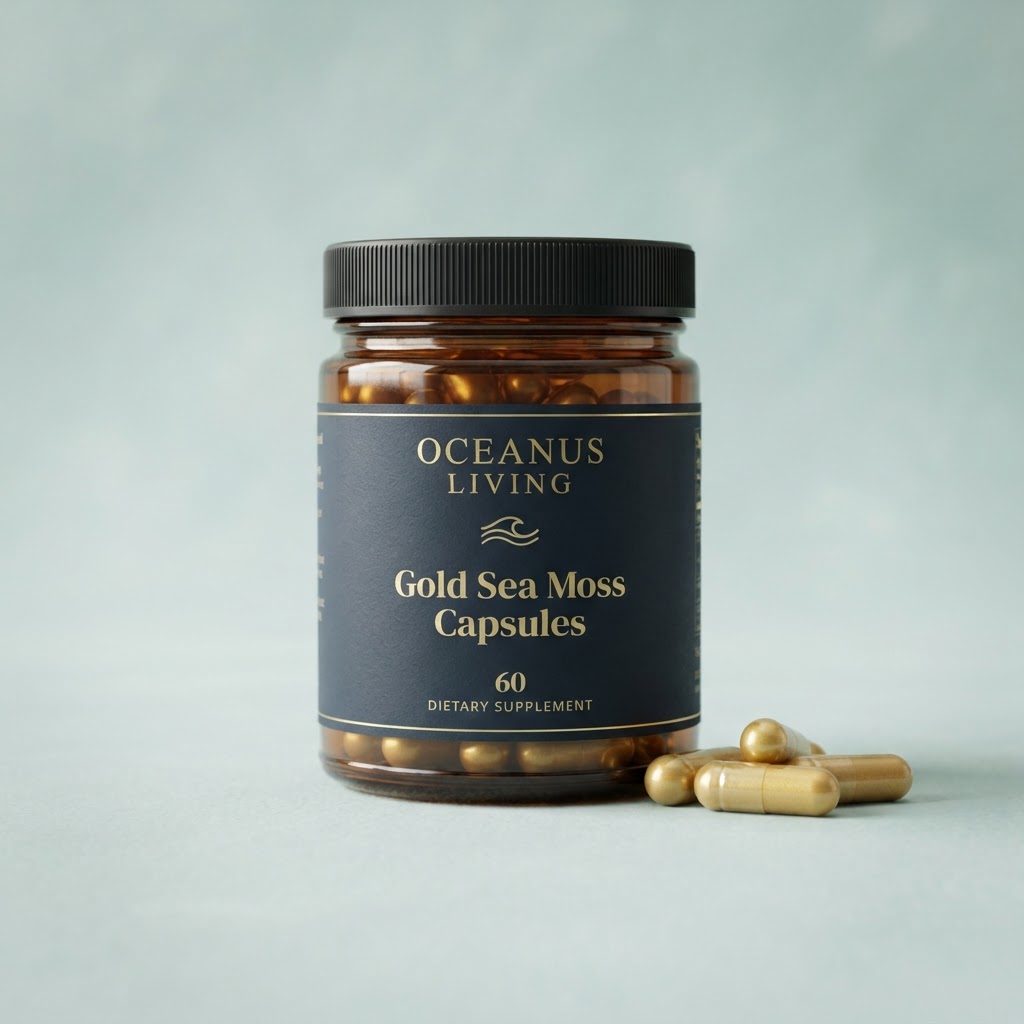
Capsules are dried, milled moss in a capsule shell. No taste, no fridge, exact dosing, easy to travel with.
Raw dried moss is the cheapest per gram and the most work: you rinse, soak, inspect and blend it yourself, and the result depends on your kitchen. It also arrives with no finished-product testing, because there is no finished product yet.
There is no best format, only the one you will actually keep using. We compare the two most popular in detail in our guide to gel versus capsules.
Lab testing: batch results, or just a badge?
This is where price differences are usually hiding.
A "lab tested" graphic is not evidence. What you want is a published result tied to the batch number on your jar, covering the four heavy metals — lead, cadmium, mercury and arsenic — and iodine, with a test date. One certificate from two years ago covering one shipment does not describe the jar you are about to buy.
Two follow-up questions separate the serious from the rest. Is testing per batch or one-off? And is it the finished product or the raw material? Testing dry moss before it becomes gel tells you about the seaweed, not about a serving.
Iodine deserves particular attention: it varies by species, water, season and processing, so a brand quoting one universal figure for all time is quoting an average of somebody else's seaweed.
The ingredients list
Turn the jar round. A sea moss gel needs remarkably little in it: sea moss, water, and anything the brand has deliberately added for flavour. Ours also carries lemon, lime and cinnamon, which are stated plainly on the label.
What should give you pause: thickeners and gums (moss gels on its own — added gums usually mean less moss), sugars and syrups, "natural flavourings" doing unexplained work, preservatives in something sold as fresh, and long lists of fruit powders that let a brand market a rainbow while diluting the moss. Also check where allergens are declared, and whether the label states the serving size and iodine per serving at all.
Price per serving, not per jar
Jar prices are not comparable until you convert them.
Work out the serving size, how many servings the pack contains, and divide. Our gel is £25 for a 500ml jar with a 2-tablespoon (30g) daily serving, which works out at roughly [CHECK] servings per jar, or about [CHECK] per day; on a monthly subscription the jar is £22.50. Our capsules are £20 for 60 x 1000mg capsules, with the daily dose stated on the label — again, divide by the dose to get your cost per day.
Do the same sum on any jar you are comparing, and check what the moss-to-water ratio is if the brand states it. A cheap jar that is mostly water is not cheap. Neither is an expensive one, if the only difference is the label.
Delivery, cold chain and subscriptions
Fresh gel is a chilled food, so the logistics matter.
- How is it packed and how fast does it ship? Ask about insulation and dispatch times, and prefer early-week dispatch so nothing sits in a depot over a weekend.
- What happens if it arrives warm? A brand that makes fresh gel should have an answer ready.
- What is the use-by on arrival? A short remaining window is a real cost.
- Are subscriptions flexible? Look for pause, skip and cancel without contacting anyone. Ours run through the Stripe customer portal, so you control them yourself, and monthly delivery saves 10%.
The checklist in one place
Before you buy, you should be able to answer yes to all of these:
- The species is named, and it matches what is in the jar.
- The growing location and method are stated.
- Testing is per batch, on the finished product, covering heavy metals and iodine.
- The batch result is published or available on request, with a test date.
- The ingredients list is short and every item is explained.
- The serving size is on the label, and you have worked out cost per serving.
- Delivery is chilled and fast, and any subscription is genuinely cancellable.
- If you have a thyroid condition, take thyroid medication, are pregnant or breastfeeding, or are considering it for a child — you have spoken to a GP or pharmacist first.
If you are still deciding what sea moss even is before you compare sellers, start with our introduction to what sea moss is. When you are ready to compare formats and prices, everything we make is in the shop.
Oceanus Living
Shop lab-tested sea moss
Gel, capsules and raw St Lucia sea moss. Subscribe and save 10%.
Shop all productsFrequently Asked Questions
Related
[FOUNDER NAME]
Written and reviewed by the Oceanus Living team for accuracy and UK compliance.
Last updated 25 August 2026
This article is for general information only and is not medical advice. Food supplements should not replace a varied, balanced diet and healthy lifestyle. Oceanus Living products are not intended to diagnose, treat, cure or prevent any disease or condition. If you are pregnant, breastfeeding, taking medication, have a thyroid condition, or are considering use for a child, speak to a qualified healthcare professional first.